Monday, 14 June 2021

Social Studies: Significant Natural Areas

Significant Natural Areas, otherwise known as SNA, are areas of land that have been identified to have a high ecological value. In other words: there are special plants and animals residing on that land. This is an initiative brought in by the Resource Management Act and implemented by the Far North District Council, with the aim to put a lid on habitat loss and land development. To do this, the FNDC (Far North District Council) is bringing in specific rules and regulations which will have a massive impact on property owners. Land owners will no longer be authorised to clear, develop or subdivide their property, unless they apply for resource consent from the council, plus an additional fee. You are allowed to plant native species within the SNA, but bringing in exotic vegetation is no longer allowed. Finally, land owners are under no obligation to introduce fencing onto their property to actively protect the SNA areas, but you are not compensated for having SNA land on your property.  

Under no obligation... Land owners can no longer develop, subdivide or clear their land without consent from the council, an extra fee, and building management- but landowners are under no obligation to protect the SNA. This new initiative removes a land owner's freedom to dictate what occurs on their land- land that is rightfully theirs, land they have already paid for. It might be argued that the FNDC is simply trying to protect the land, not take it away from people, but the rules and regulations that would be put in place should this action go ahead would restrict landowners in such a way that they essentially no longer own the land. 

Firstly, property owners own their respective areas of land- they have already paid for it, meaning that legally, they have the right to use the land as they so wish- within reason. Introducing the SNA initiative would mean that landowners must apply for a resource consent from the council before developing their land- the council then needs to approve the application, leaving the overall decision of what the owner can do with their land to the council. How can land owners be expected to cooperate with the new initiative, if it means that land they own is essentially going to be placed in the possession of the council- maybe not intentionally, but that is what will happen under the rules and regulations the action brings in. 

Secondly, the import and planting of exotic vegetation within land that is SNA is strictly prohibited without consent from the council. To put this in perspective, if a house you own is already on SNA land and you want to put a hedge in place to conceal the house slightly, you are not allowed to do this, or you must pay the council the additional fees. Again, this initiative is dictating what you can and cannot do on your property- yes, they are trying to slow habitat loss to introduced species, but they are doing it at land owners expense, they are doing it at the communities expense. This initiative is simply looking at areas of land that have native bush on them and saying, "yes that is protected," or "no you can't use that any more," etc, etc- instead of isolating the areas of land that can easily be protected, they are looking at every scrap of land in the far north, not taking into consideration: land owners, property and areas that are already covenanted. They are trying to protect all the land, when that is not realistically possible. Then there is also the question of whether they are attempting to protect the land or are doing what has been described as a "modern land grab." I believe that this initiative does not consider land and property owners in the far north, it does not consider the people of Te Tai Tokerau, and as a result is most accurately described as a modern land grab. Oh, by the way, gorse is considered SNA...  

Thirdly, you still have to pay land rates and you are not compensated for having SNA on your property. So despite the fact that you have already paid for the property, are paying land rates for land that you currently can use, you are not going to be compensated for having SNA on your land- meaning that should the action go through, that land containing SNA and will essentially be unusable by owners, who have already paid for that land with the intention of using it in some way. And land owners are still required to pay for that land that they are unable to use. So, you have to pay for land you can't use, and are not compensated for not being able to use that land. Out of the three main regulations listed above, this one strikes me as the one that causes people to describe this SNA initiative as a land grab. The FNDC is responsible for the execution of this action, but they need to take into consideration the members of the Northland community, modifying the initiative to better suit our current environment.  

Taking away people's freedom to decide removes their willingness to cooperate. Taking away people's ability to freely make a decision only makes people more strongly oppose the decision in the first place. The council is trying to protect our precious habitat and land, yes, but the way they are going about it is driving people to attack, disagree and protest the introduction of this initiative. The FNDC needs to see that completely halting the development and usage of land is not going to solve the major issue of habitat loss. I believe that our country is panicking, trying to make up for the land we have already lost to pasture and paddock, factory and farm- shutting down property owners' ability to develop their land will not solve the problem in the long run, I believe it will make it worse. We can neither continue to destroy the sparse natural habitat that remains in Northland- but neither can we completely stop the development of the forty two percent of land that has been identified as SNA. Maori or commercial land, this new SNA policy will affect both, and the people of the Northland community and the FNDC need to come to a constructive solution to help tackle the habitat issue our country is facing. 

Below is a map that shows areas of land that have been identified as SNA. Please comment if your property or areas of land you own fall under an SNA area.  

Thursday, 10 June 2021

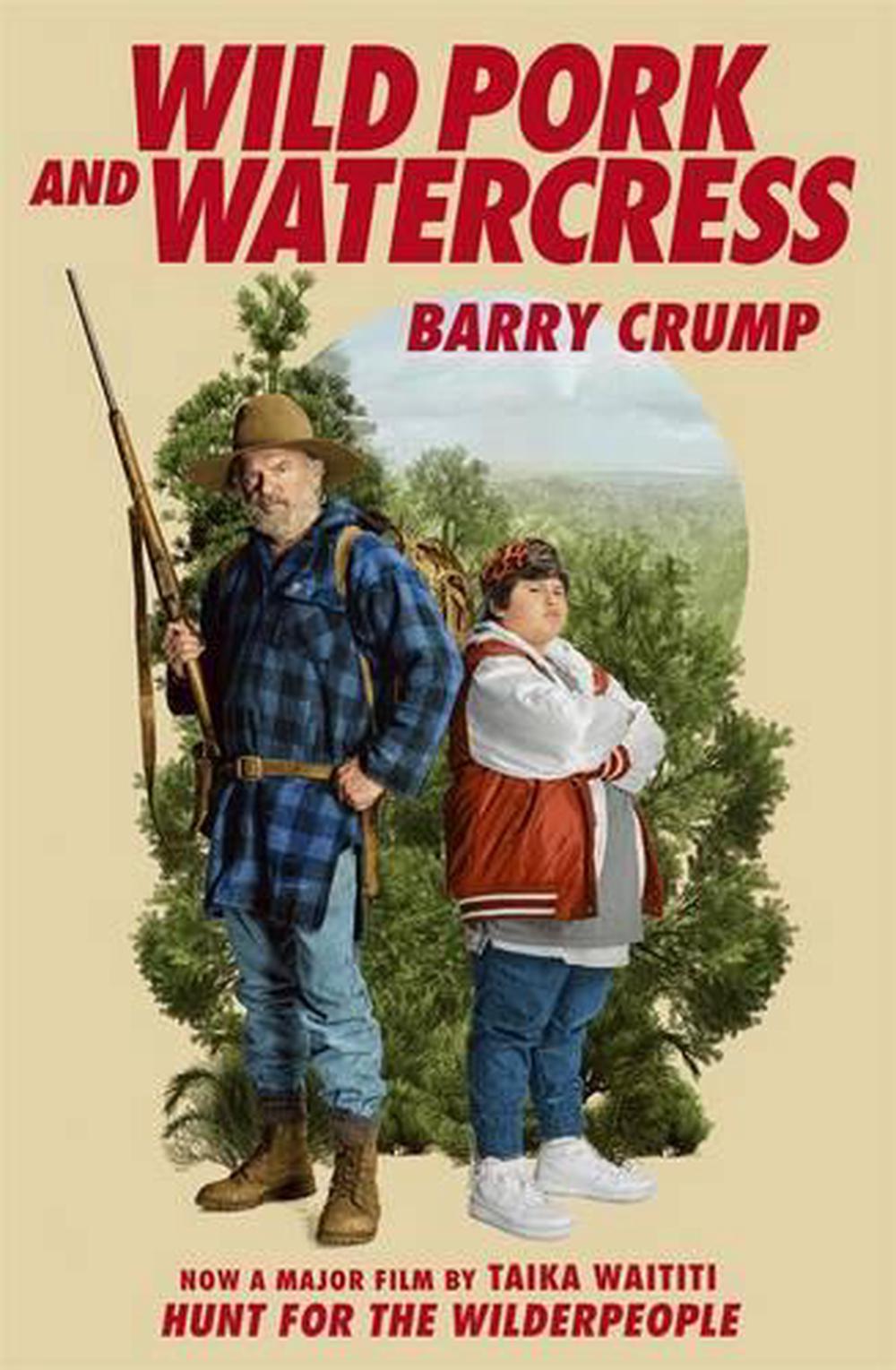
ENG - Wild Pork and Watercress

During our Y10 ENG classes this term we have been working on a novel study of the book Wild Pork and Watercress, by New Zealand famous author Barry Crump. You might be more familiar with the movie adaptation: Hunt for the Wilderpeople. To summarise the plot, Richard Morehu Baker goes to live with his Aunt Bella and Uncle Hec following a series of failed housing attempts. He slowly learns how to live on the farm, becoming and adept hunter and a great help to his foster family. All is well until Aunty Bella suffers from a stroke, passing away mere months after taking Rickey in. Uncle Hec is forced to leave the farm, and Rickey would have had to return to the social welfare people had he and Uncle Hec not run away into the bush. The majority of the book recounts the adventures the pair experience whilst in the bush; broken feet, running from the authorities and becoming wanted outlaws. The book concludes with an epitaph recounted from the view of another character, showing the story in an entirely new light. 

Following Uncle Hec and Rickey's journey, watching as they come to relate to each other more and more, and laughing at Rickey's comical perspective and outlook at life- I would thoroughly recommend this book to anybody, as it is a fairly easy read, highly entertaining, and contains many valuable life lessons. 

Wild Pork and Watercress by Barry Crump, Paperback, 9780143573746 | Buy  online at The Nile

Wednesday, 12 May 2021

SST - What is a leader?

What is a leader? The dictionary defines leadership as: “The action of leading a group of people or an organisation. The state or position of being a leader. The leaders of an organisation, country, etc.” So by definition, a leader is someone who stands at the head of a country; a prime minister, a president- personal qualities include: an ability to make difficult decisions, speak confidently in public, focus on the task at hand. This is leadership in the most robotic, successful and efficient sense. However that definition leaves out the humane aspects of leadership. The aspects that gain a leader respect and encourage others to follow. Traits such as open-mindedness, honesty, integrity and drive. Someone who is competent in both these aspects of leadership will excel as a leader. 

A person I believe displayed these qualities is Dame Whina Cooper; her determination in gaining equal rights for the Maori community and leading her people to fight for what they believe. Born in northern Hokianga in 1895, Whina Cooper quickly began to play an active role in the community, helping to set up Maori land development schemes- eleven in total, comprising forty thousand to ninety eight thousand acres. Following the death of her second husband, Bill Cooper, in 1949, Whina Cooper moved to Auckland where she became a pan-tribal Maori leader. She also founded the Women's Welfare League, an organisation that by the mid-1950’s had over three hundred branches and four thousand members. However, Dame Whina Cooper is most well known for leading the 1975 land march from Te Hapua, the far north, to the parliament in Wellington. At the age of eighty, Whina Cooper walked over one hundred kilometres, to champion for the rights of her people. At the end of her journey, Whina Cooper presented the prime minister with a petition signed by over six thousand people- an incredible achievement from an eighty year old woman that shows that you are never too old to make a change. Dame Whina Cooper passed away in 1994 at the age of ninety eight. In my opinion Whina Cooper is an incredible example of a leader for the reasons stated above. 


Wednesday, 7 April 2021

SST PODCAST

For the past few weeks during our social studies classes, we have been working on producing our first ever podcasts. These encompassed personal facts such as our date of birth, as well as our interests and life stories. We were learning to utilise the platform WeVideo to create podcasts and will use it in the future as ways of presenting our assessments. 

Tuesday, 16 March 2021

Robotics - Microbit Code: Dice

This is the result of our work in robotics so far. We have learnt how to utilise the microbit, creating codes and uploading them onto the device, allowing us to do all sorts of cool things. One of these is the example below- rock, paper, scissors. Click the shake button on the simulator to run the program.  

Friday, 26 February 2021

SST - Bean to Bar: The Journey of Whittakers Cocoa


Click on the image above to access google earth presentation. 
We are currently in a human rights unit for social studies, researching the journey of cocoa from bean to bar, talking about the ethical issues along the way. Below is the google earth visual presentation I made to illustrate the journey of cocoa. 

Wednesday, 6 January 2021

Science: Heart and Lungs Unit

The topic we have been working on in Science at the moment is called 'Heart and Lungs'. As the name suggests, this topic explores the heart and lungs as well as the blood and circulatory system. We have learnt the difference between oxygenated and deoxygenated blood, which is commonly represented by red and blue, red being oxygenated and blue representing deoxygenated blood. We learnt the function of the lungs, which is to reoxygenate the blood as it passes through on its way to the heart. The heart itself is extremely strong, pumping the equivalent of 7, 200 litres of blood each day. Comprised of four chambers known as atrium's and ventricles, which accurately makes our heart known as a four chambered heart. The blood travels into the atrium and is then pumped into the ventricle, before being pumped out of the heart and to its respective place. Valves in the lining of the artery's that lead to the heart, known as semi-lunar valves, fill with escaping blood and press together to form a seal, preventing blood from falling back into the heart. We also learnt about the two different jobs that the heart completes. The right side of the heart is responsible for pumping deoxygenated blood to the lungs to get reoxygenated and then pumping it back into the heart, to be pumped around the body. For this reason, the right side of the heart is often much weaker, the muscle not as thick, due to the fact that it only needs to be pumped to the lungs and not around the entire body. That is the job of the left side of the heart, which is constantly working to pump the newly oxygenated blood around the body. This is why the left side of the heart is visibly much stronger, because it's job is to pump blood to the entire body, which is much more strenuous. We learnt about the coronary veins which line the surface of the heart and are responsible for providing the heart with a constant source of oxygen to prevent it from becoming too strained. Finally we learn about the actual composition of blood, and the four main components which make it up. Plasma, the liquid component of blood which is responsible for transporting the nutrients around the body. Plasma makes up 55% of the blood. Next are the Red Blood Cells, or RBC. They are the cells responsible for transporting oxygen around the body. They are the only cell that does not possess a nucleus, instead possessing haemoglobin, which attracts oxygen to affix itself to the cell and gives it its read colour. They make up 45% of the blood. The remaining less than 1% is made up of leukocytes (White blood cells, WBC) and platelets. WBC are responsible for producing the necessary antibodies to help arm the immune system and fight infection. Platelets are the body's natural plaster, clotting the blood around open wounds to form scabs which prevent the wound from bleeding; they make up less than 1% of the bloods volume. That concluded our learning for this unit for the duration of 2020. We will finalise the topic with an assessment when we return in 2021.